Himmelstoss
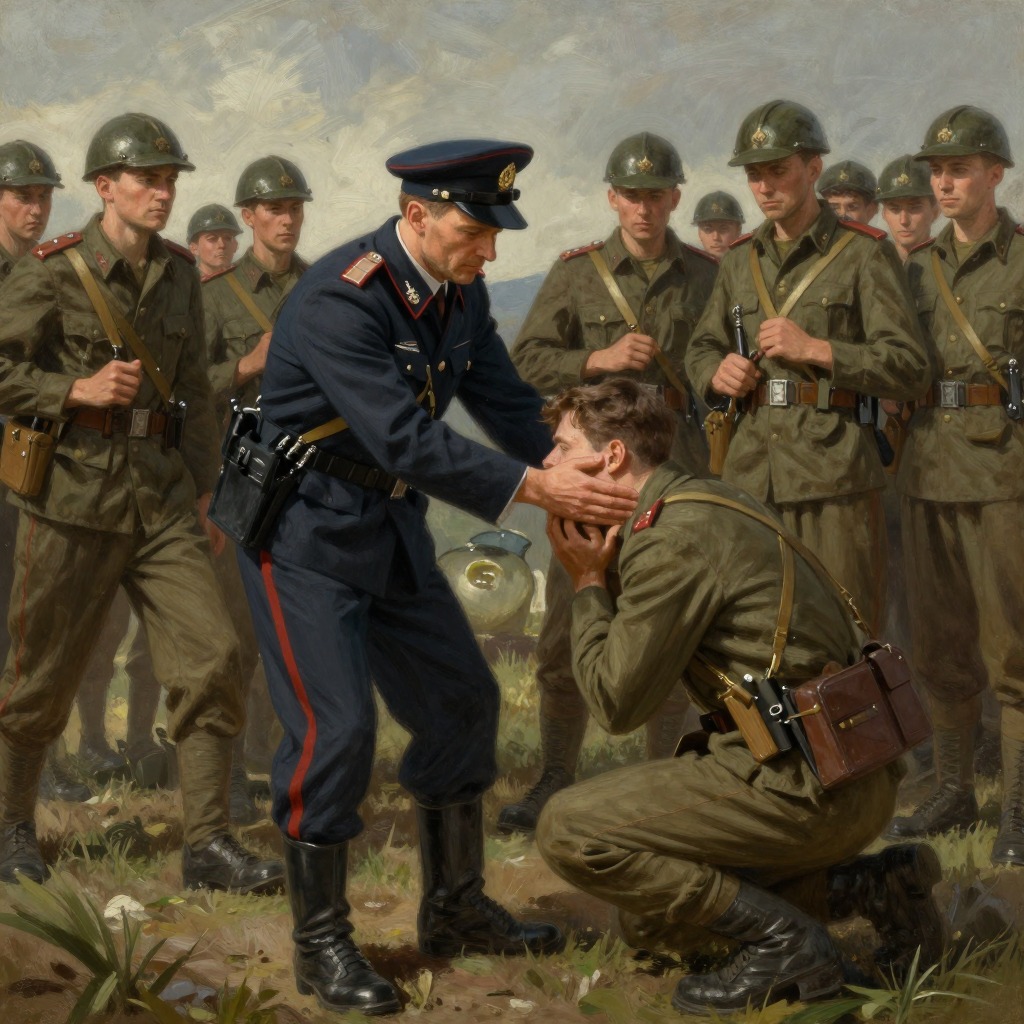
Himmelstoss, a small, undersized man with a foxy, waxed moustache, was a postman in civilian life and had served twelve years in the army. He was the strictest disciplinarian in the camp and proud of it, known as the "terror of Klosterberg." His special dislike was reserved for Paul Bäumer, Albert Kropp, Tjaden, and Haie Westhus, in whom he sensed a quiet defiance. He subjected them to relentless, inventive torments: making Bäumer remake his bed fourteen times in one morning, forcing him to knead a pair of iron-hard boots for twenty hours until they became soft, and ordering him to scrub out the Corporals' Mess with a toothbrush. Kropp and Bäumer were made to clear the barrack-square of snow with a hand-broom and dustpan, and would have frozen had a lieutenant not intervened. For six consecutive weeks Bäumer did guard every Sunday and was hut-orderly for the same period. Himmelstoss drilled them on a wet, newly-ploughed field with the commands "Prepare to advance, advance!" and "Lie down!" until Bäumer collapsed, then required him to report four hours later with his clothes scrubbed clean and his hands chafed and bleeding. He made Kropp, Westhus, Tjaden, and Bäumer stand at attention in a hard frost without gloves for a quarter of an hour, watching for the slightest movement of their bare fingers on the steel rifle barrel. At two in the morning he made Bäumer run eight times from the top floor of the barracks to the courtyard in his shirt because his drawers projected three inches beyond the edge of the stool. During bayonet practice, Himmelstoss used a handy wooden weapon to strike Bäumer's arms black and blue, until Bäumer, enraged, ran at him and knocked him down with a jab in the stomach. The company commander laughed at Himmelstoss and told him to keep his eyes open. Himmelstoss's authority was finally broken when Kropp threatened to report him; after that, he left them in peace, though he still referred to them as swine, with a certain respect in his tone.
The Thrashing and the Front
Tjaden had a special grudge against Himmelstoss for his method of curing bed-wetting: he quartered Tjaden with another bed-wetter, Kindervater, in a bunk arrangement designed to make each retaliate against the other. The night before the four friends left for the front, they ambushed Himmelstoss on a dark road, threw a bed-cover over his head, and beat him thoroughly. Haie Westhus delivered the first blow, which would have felled an ox, and Tjaden whipped him with a belt while Haie held his head on a cushion to muffle his yells. Himmelstoss never discovered who had done it. When he later arrived at the front, Tjaden openly insulted him, calling him a "dirty hound" and refusing to stand at attention. Himmelstoss reported him, but Lieutenant Bertinck, after hearing the story of the bed-wetting, gave Tjaden three days' open arrest and Himmelstoss a lecture about the front not being a parade-ground. During a heavy attack, Bäumer found Himmelstoss in a dug-out with a small scratch, pretending to be wounded while young recruits were out fighting. Bäumer seized him by the neck, shook him, knocked his head against the wall, kicked him in the ribs, and shoved him out head-first. A lieutenant's command then sent Himmelstoss forward, and he once more became the smart parade-ground soldier, outstripping even the lieutenant.
Later Encounters and Transformation
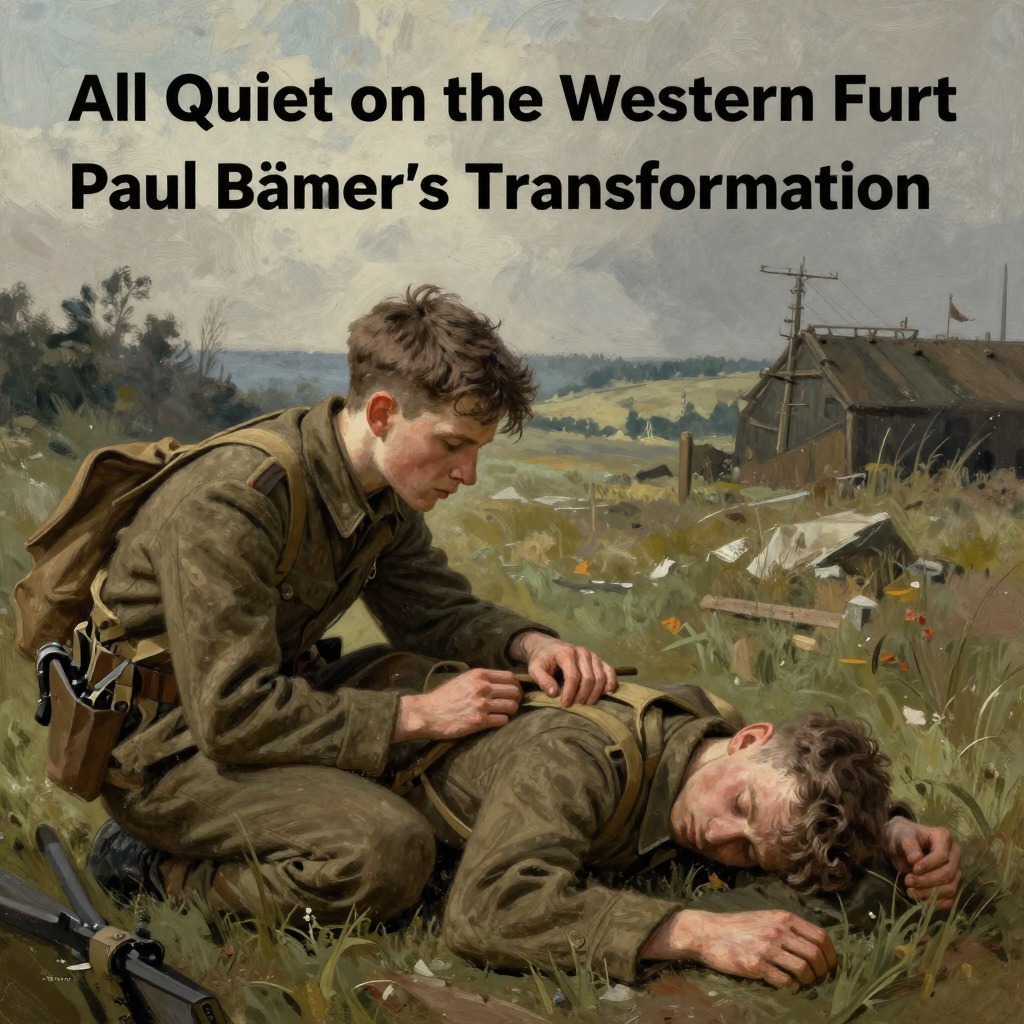
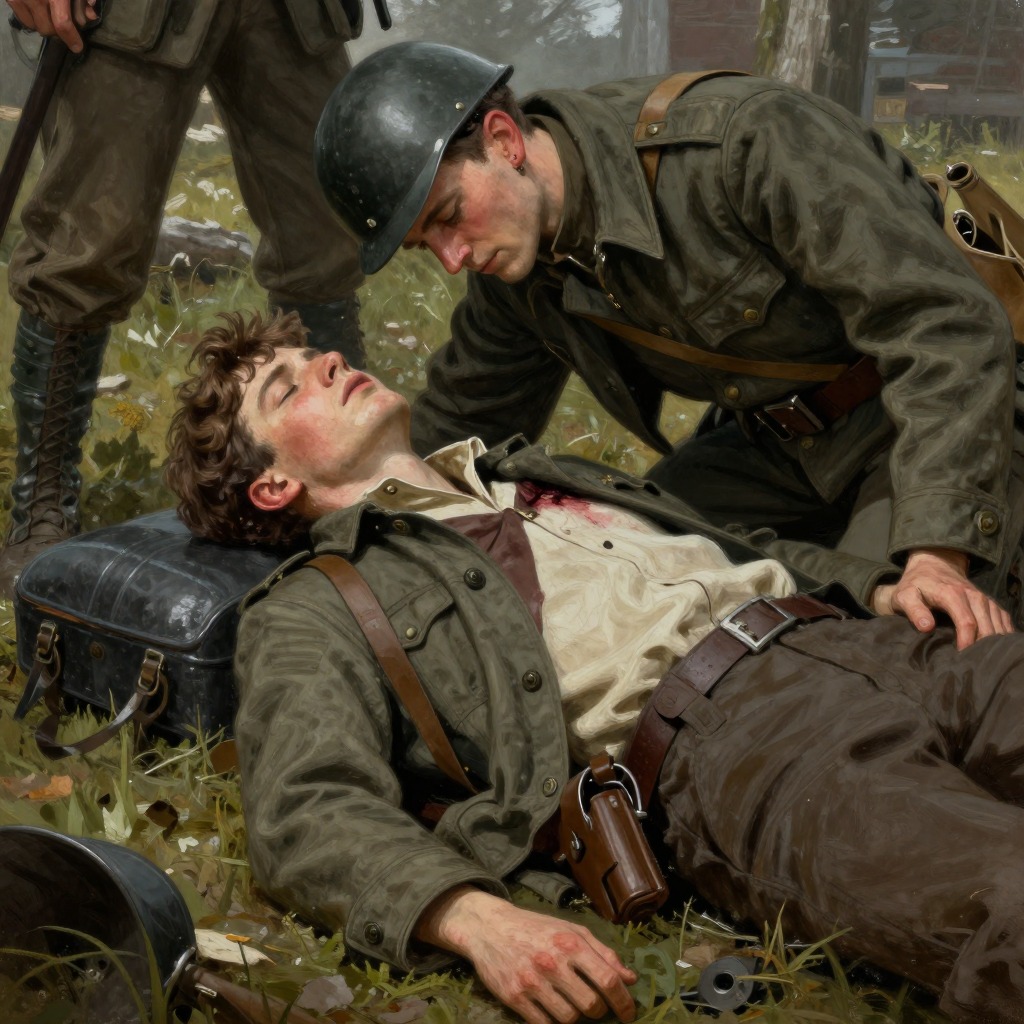
After his time in the trenches, Himmelstoss had the bounce knocked out of him. He sought to get on good terms with the group, treating them in the canteen and, when he took the place of the sergeant-cook on leave, producing two pounds of sugar and a half-pound of butter for Tjaden. He even saw to it that they were detailed to the cook-house for potato and turnip peeling, where they received officers' fare. Bäumer was willing to be reconciled, having seen Himmelstoss bring in the wounded Haie Westhus. Only Tjaden remained reserved and suspicious, but he was won over by the butter and sugar. Himmelstoss's transformation from a bullying drill-sergeant to a cowering, then conciliatory, front-line soldier illustrates the novel's theme that the war strips away artificial authority and reveals the common humanity beneath the uniform.